


Bad Boys of IMSA Part 3: The Whittingtons
The following excerpts are entertaining anecdotes about the notorious Whittington brothers. For the full story on how Bill and Don earned prison sentences for 15 years and 18 months, respectively, read IMSA: 1969-1989.
Chapter Introduction:
It’s no secret racing takes talent and money – lots of it, especially if you want to compete for the top step of the podium. Most of the team owners at the sharp end of the grid in the Camel GT Series made their money by legitimate means and many developed beneficial sponsor deals to support them. But no history of the Camel GT Series would be complete without telling the stories of the bad boys of IMSA, the few that made their racing money on the wrong side of the law.
The stories about these outlaws were outrageous and at times hard to believe. The tales about their rise to fame and inevitable falls from grace have taken on a life of their own over the years, both tainting the Camel GT Series and giving it the kind of spice that makes for the stuff of legends. “The running joke in the paddock at the time was that IMSA stood for the International Marijuana Smugglers Association,” recalled Bobby Rahal. The truth was far more mundane; the bulk of Camel GT fields were made up of honest businessmen, but the bad apples stood out and attracted all the wrong kind of salacious media coverage.
The Whittington Brothers:
If John Paul Sr.’s violent temper made him the most feared of the bad boys, Don and Bill Whittington became the most notorious. The brothers from Ft. Lauderdale burst onto the IMSA scene in 1978, starting with the 12 Hours of Sebring, where Don finished 24th overall in a Porsche 934/5. Racing was in their blood; their father, Don Whittington, Sr., had competed briefly in the USAC Championship Car circuit in the late 1950s.
The younger Whittingtons were soon entering their own 935s in the sprint races and co-driving in the longer events. No one in the paddock seemed to know much about them, yet the pair learned quickly, with Bill finishing second in Camel GT points in 1979 and Don finishing fourth. The following year, they won the prestigious 24 Hours of Le Mans, co-driving with Klaus Ludwig in the first-ever Kremer Porsche 935 K3, which they then purchased and brought to IMSA.
The Whittington’s bright yellow 935s quickly become a force to be reckoned with on the track, but it was their purchase of the Road Atlanta circuit in 1978 that raised the most eyebrows. That, and the fact that they owned several priceless World War II fighter planes including a Grumman Bearcat and two P-51 Mustang warbirds that they raced in the unlimited class at the Reno air races. The 935s were unsponsored, yet no expense was spared in preparing the cars or the planes; money never seemed to be a problem for the duo.
Soon, whispers began to circulate in the paddock about the source of their lavish lifestyle, but IMSA officials certainly didn’t stick their noses into someone else’s business. John Bishop heard the rumors along with everyone else, but he liked Bill and Don. He had a soft spot for airplane guys, especially guys that shared a deep passion for warbirds. The watchwords for the time: “Don’t ask, don’t tell.”
"I guess we should have been gossiping a whole lot more than we were about where these guys got their money,” recalled Bishop later. “At the time, we were incredibly busy just running IMSA. We just didn't give it that big a thought. It wasn't posed as a problem to us by anybody. All we cared about was the quality of the grid and whether the races were going to be run safely and consistently.”
“I knew the Whittington’s well,” recalled Jim Busby. “Bill was actually a pretty nice guy and a heck of a race car driver. We ended up co-driving a few times and won Mid-Ohio together in a 935 one year. And we helped prepare their cars. It was common knowledge in the paddock about their background, but we needed the work and it was none of my business how they paid the bills.”
Following their Le Mans success in 1980, the Whittingtons, now including youngest brother Dale, competed effectively at the sharp end of the Camel GT grid with multiple wins and podiums. In 1984, Bill partnered with Randy Lanier as owners of the Blue Thunder race team that went on to help Lanier win the Camel GT championship that year; Bill finished second in the points. In addition, Bill and Don both started at the Indianapolis 500 five times in the six years between 1980 and 1985, with a best finish of sixth place by Don in 1982. That was the year all three brothers qualified at Indy, an unprecedented and since unequalled feat in the history of the world-famous race.
The good times wouldn’t last. The Whittington empire came crashing down in 1986 when federal authorities indicted Bill and Don on money laundering, tax evasion and drug smuggling charges. Along with Lanier, the Whittingtons were operating a massive marijuana smuggling operation that involved fast boats and multiple airplanes. Some even suggested that the reason they purchased Road Atlanta in the first place was to use the relatively secluded back straight as a landing strip for their illicit activity.
Bill was sentenced to 15 years in federal prison in 1986 when he plead guilty to tax evasion and conspiracy charges. Don was sentenced to 18 months for money laundering in connection with the whole scheme. As part of the plea deal, the brothers had to make a $7 million restitution to the government, which included selling the P-51 Mustangs, the 1979 Le Mans-winning 935, other race cars and team equipment. Don was paroled in 1988 and Bill was released in 1990. They returned to the business of flying, opening a plane leasing company based in Florida.
Investigators determined that Dale Whittington, the youngest of the three brothers, was not involved in the operation and he was never charged with any crime. Dale went on to compete in the IMSA American Le Mans Series in 1999 and 2000 before dying of a drug overdose in 2000.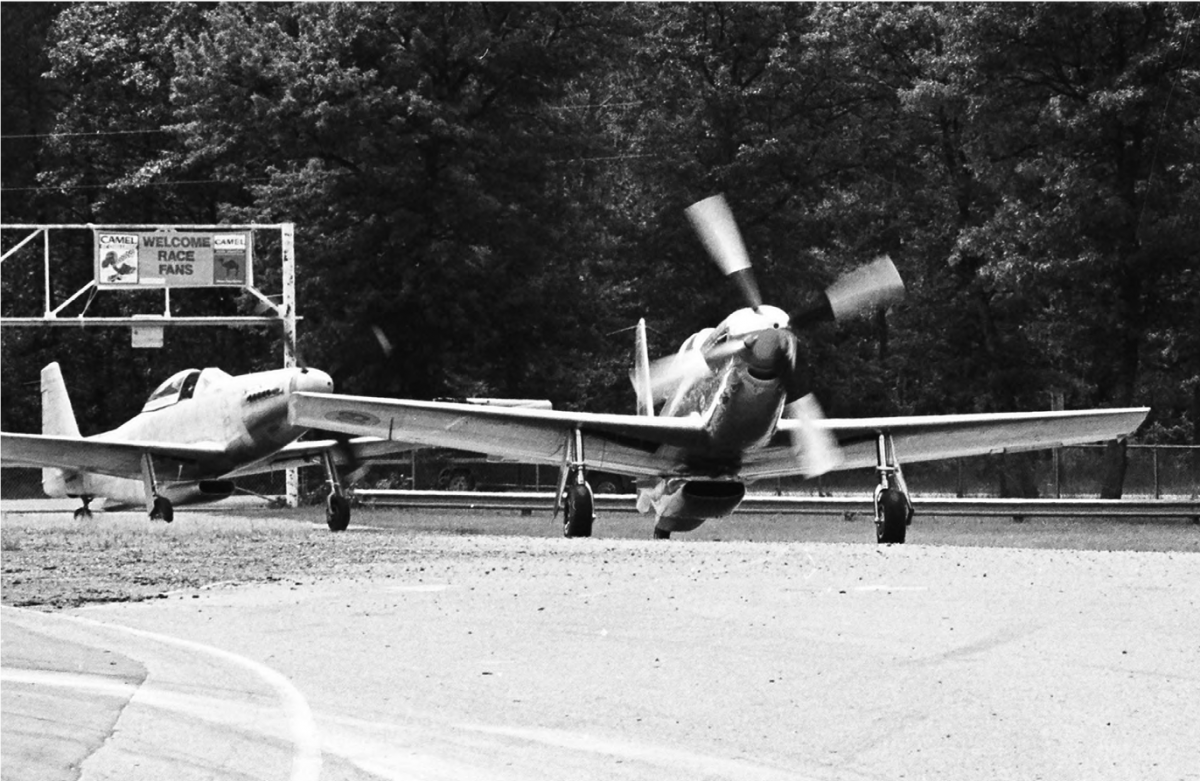
At Road Atlanta race weekends from 1979 through 1983, the Whittington brothers would often make a grand entrance by shutting down all track activity in the middle of the day so they could buzz the field in their matching P-51 Mustangs and then land on the back stretch. Once on the ground, the fighter planes would taxi up the hill, underneath the bridge leading onto the front straight, down the other side of the hill and into the pit area on the outside of the track. It’s fair to say that these were the most spectacular arrivals in the history of IMSA. Mark Raffauf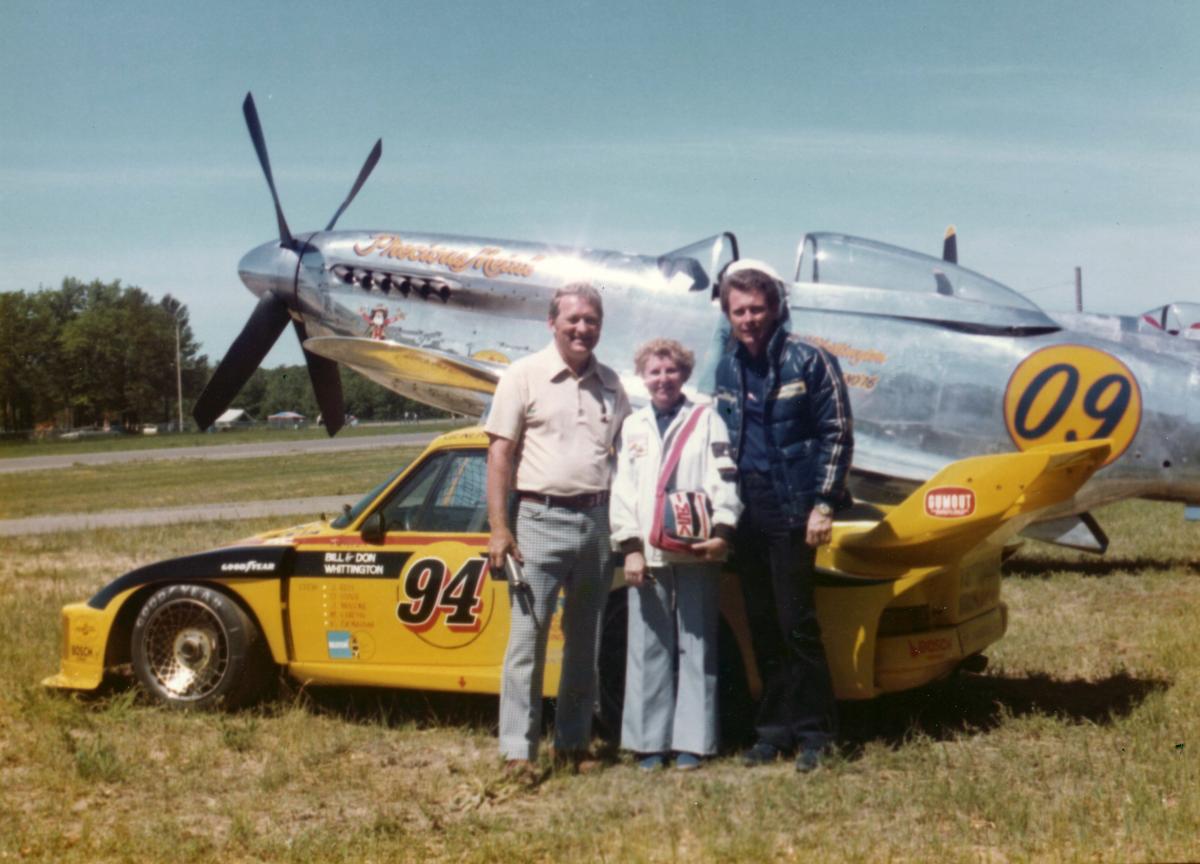
Don Whittington poses with John and Peg Bishop in front of one of the Whittington brother's Porsche 935s and a Mustang P-51 at Brainerd. Bishop family
Want to read more about the Bad Boys of IMSA? Check out Part 1: John Paul, Sr. ; and Part 2: Randy Lanier.