


Red Tractors: Chapter One
The Hinsdale Connection: 1958–1959
By Lee Klancher
“If we are able, in our engineering, to keep abreast of, or ahead of, any competitor, there isn't any question about this business going on indefinitely.”
—John McCaffrey, Harvester World, 1958
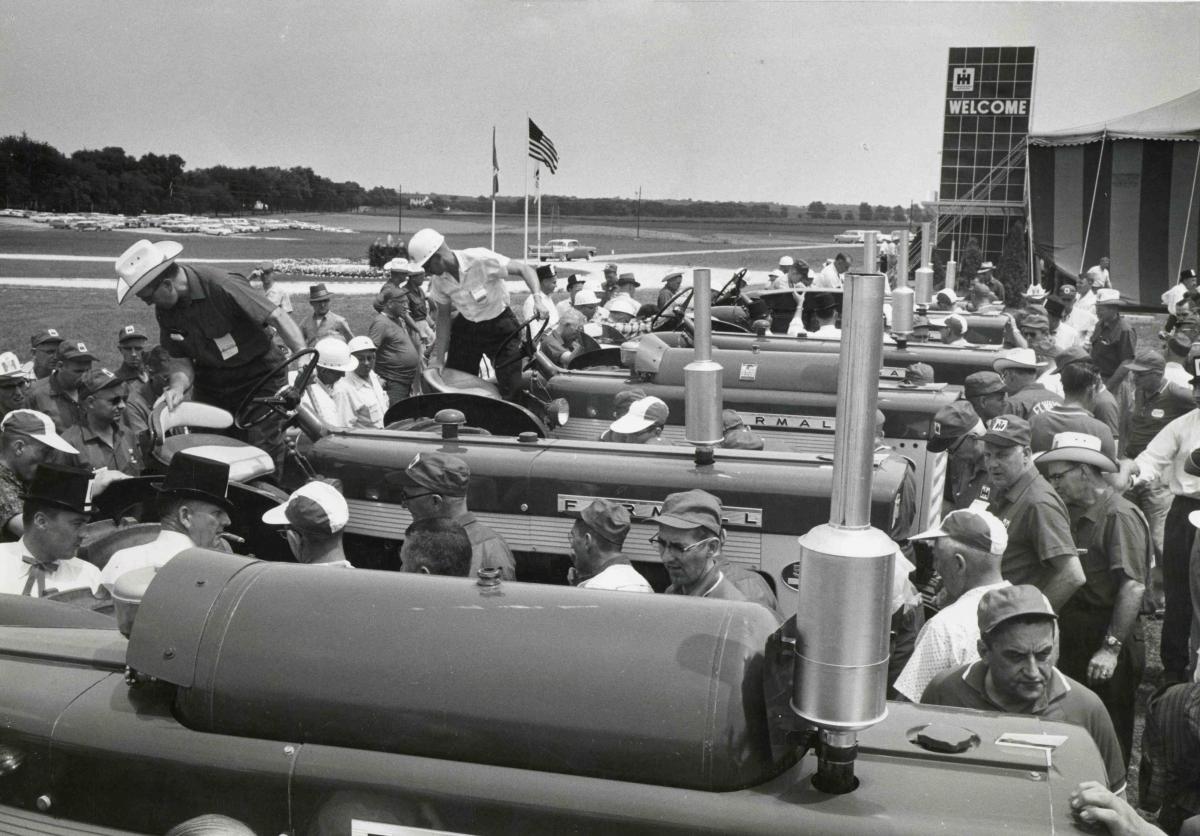
The 40 and 60 series tractors were introduced with much fanfare at the largest tractor introduction in history, held at the experimental farm near Hinsdale, Illinois. Wisconsin Historical Society / 46316
In 1917, Harvester purchased a 414-acre farm just 20 miles from downtown Chicago. The original Farmall was tested on the farm’s gently rolling hills, along with hundreds of other pieces of agricultural equipment. Annual demonstration outings for IHC executives and staff were held there, complete with orchestra accompaniment, circus tents, and lavish catered meals. In the early years, the place was known as the Hinsdale Farm, and it later became known as Burr Ridge.
During heavy investment into research and engineering in the 1950s, Hinsdale was selected as the site for the $5 million Farm Equipment Research and Engineering Center (FEREC). The eight-acre site would consolidate Harvester’s engineering efforts and put 1,360 engineering and support staff together under one roof. FEREC was state-of-the-art, complete with an indoor “field” used for tractor and implement testing, a tractor-sized photographic studio, and temperature-controlled rooms capable of exposing machinery to 130 degrees of heat and 50 degrees below zero.
When the plans for the new center were made public in 1956, a nearby community decided to change the name of their village from the Hinsdale Countryside Estates to Harvester, Illinois.
All of this was part of a concerted effort to make up for lost time. In the early 1950s, Harvester had spread their development resources among many products. While cash was funneled to construction, trucks, and refrigeration divisions, tractor development focused on refinements and accessories rather than new platforms. The hundred series and the 30-50 series were both re-skins of existing platforms with upgraded features such torque amplification to ease on the fly shifting and Fast Hitch. Too many of the upgrades were gimmicky additions, such as Electrall, a heavily promoted portable electric generator unit that sold so miserably they are rare and prized collectibles today.
Also, management expressed interest in the urban market, feeling that the agricultural market was becoming saturated. They had successfully developed small tractors, and continued to enjoy success in that segment. As late as January 1958, Harvester World ran a feature describing the increasing losses of farmland to suburban sprawl. Unfortunately, however, Harvester underestimated the farmer’s interest in larger, more powerful tractors.
Not enough time and money had been invested in tractor development, particularly the large machines so popular with farmers working larger and larger areas.
Harvester adjusted in the mid-1950s and turned their eyes toward the large tractor prize. More horsepower and more features were needed to satisfy the needs of the power farmer. The engine came from the crawler line, whose proven D282 diesel was used as the base for the new series’ gas engine. Features were one of the things Harvester had been developing steadily since 1939, and they offered a series of improvements in their hitch system, hydraulics, and power takeoff system. Time was not on their side—the program to develop the 40 and 60 series began in the mid-1950s—but the pieces were mostly in place.
As the new FEREC center was built and prototypes of the new 40 and 60 series tractors were tested, changes were taking place at the highest levels of IHC. In May 1958, McCaffrey retired and was replaced by another lifelong company man, Frank W. Jenks, who came from the credit and merchandising side. After nearly a decade of sliding deep into debt, electing a new leader with a fiscal background made perfect sense.
Jenks stepped in as the recession of late 1957 and early 1958 was beginning to wane. Investments in research and engineering were paying off. A brand-new line of tractors was ready to roll out late in the year. The line had fresh styling and sheet metal, six-cylinder engines repurposed from the truck line, and a host of new features.
Months before Jenks replaced McCaffrey, plans were laid for a new model introduction to exceed any previously put on the by Harvester or anyone else, for that matter. Introductions were often done at regional shows, but this one would be held at Hinsdale (now Burr Ridge). More than 5,500 dealers were invited, and Harvester hired the Kilgore Rangerettes, a group of female dancers famed for precision performances and infamously short skirts, to open the ceremonies and perform dances such as the “power stroke,” during which the dance formation took the shape of a piston with red bandanas flashed to simulate the engine’s firing order. Seventy-seven new tractors were placed under a massive 90x210-foot circus tent. Nearly a dozen such tents covered the grounds, with demonstration plots set up nearby for working tractors and new implements.
On July 14, five days prior to the first dealer’s arrival at Hinsdale, a storm knocked the giant tent down, blanketing the new machines with torn canvas. All but two of the new line required repairs to be presentable.
A massive effort restored the tent and tractors. The gala reportedly was a hit, with the tractors well-received and large orders placed. During the next year, the collapsed tent would be the least of the concerns blanketing the new IHC line.
The 460 and 560 models had something Harvester had not encountered much in the past: a manufacturing flaw. The rear differential’s bull and pinion gears galled under load and could fail under the right conditions. Very few of these tractors failed, but Harvester doubled the warranty on the 460s and 560s, and authorized dealers to charge them for the 19 hours of labor to replace the rear end. New parts were engineered and, eventually, a new oil formula was developed to help reduce strain on the parts. Finally, a massive recall of the 460, 560, and 660 tractors was issued in June 1959.
Kenneth Ryan, a young IHC engineer when the recall was taking place, remembers that dealers weren’t entirely displeased with the recall. They used the allowance for repairs to stay busy during the slow winter months and could perform the repair in less than the allotted 19 hours, turning a good profit.
The actual failure rate of the rear ends was fairly low, and the problem could be fixed with newly tooled parts and better oils. “Most of [the farmers] hadn’t seen a problem with their tractors,” Ryan said. “At the time, I wondered why not just wait and if your tractor does show these symptoms, rebuild it. I thought they were overreacting.”
The entire line, despite the poor publicity, was mainly a success. The 60 series tractors went on to long production lives and the all-new 240 and 340 tractors were good upgrades to the line that were very well-received. The new square-front tractors brought welcome traffic into IH dealerships. The farm recession of 1957 also began to lift in spring 1958, and farmers found themselves more willing to spend money on new machines in late 1958.
Despite a strike that slowed production at the end of 1958, the new 40 and 60 series fueled the best sales year in the history of IHC in 1959. Total U.S. company sales were $1.7 billion, an increase of 24 percent from 1958. Farm equipment sales were $458 million, up 17 percent from 1958.
In July 1959, IHC’s new crown jewel opened when the Farm Equipment Research and Engineering Center at Hinsdale, Illinois marked the start of operations. The 1.3-million-square-foot complex housed nearly 1,500 engineers and support staff and was the largest agricultural engineering center in the world.
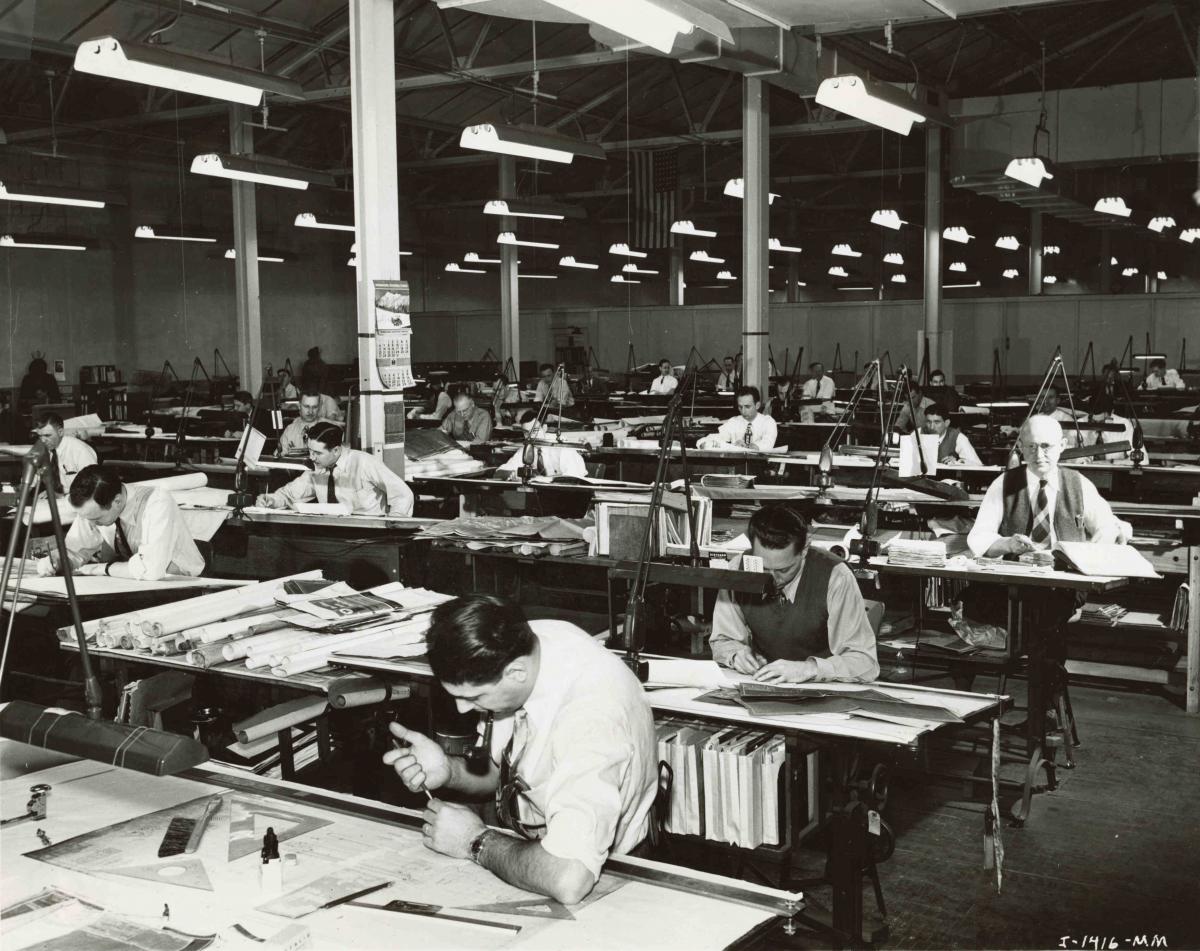
Draftsmen at the Tractor Works on March 10, 1949. Tractor design at this time was done on paper. First, scale models were built, then full-size clay and wood mockups. Designer Gregg Montgomery commented that clay was a great medium because a good clay sculptor could quickly make adjustments to the mockup. Wisconsin Historical Society / 69302
Kenneth Ryan was fresh out of engineering school when he first saw the building. His visit came at the end of trips to several facilities for job interviews. “My second-to-last interview was with Deere in Moline. Deere tried to get me to stay an extra day and break my interview with International Harvester. I nearly did, but decided I better not.”
The visit to FEREC made a lasting impression on Ryan. “It was a brand-new, beautiful facility, and a college boy’s dream to walk into that place. The labs and the engineering facilities were just perfect.” He remembered the second floor of engineering as a vast, sparkling-clean room with few partitions and dozens of engineers working at drawing boards in crisp white shirts and neckties.
When he came home from his trip, he told his fiancée that his best interview was his last. “You know, that place would be so wonderful to work at,” he said. “But I bet their offer will come in lower.”
He was wrong. The IHC offer was the best he received. “It didn’t take three seconds to figure out where I was going to work,” he said.
Once at work, he was amazed at Harvester’s resources. “They made all their own bolts and bearings,” Ryan recalled. “All these materials, IH would manufacture. You could use standard IHC materials and parts for everything.
“Everything was done right. We were using strain gauges and brittle coding way before anyone else. We had an outstanding group of people. We were strong in design and engineering, and strong in engineering skills.”
At the opening ceremonies for FEREC, the first man to the podium after President Jenks was Mark Keeler, the long-time head of the Agricultural Engineering Division. Keeler’s words that day make it clear that IHC understood their position: “To the best of my knowledge and belief, our position in this business has always been the same—first place. But we know our competition is smart. We know they’re energetic. We know they have capital and facilities. And we know they’re shooting at us.”
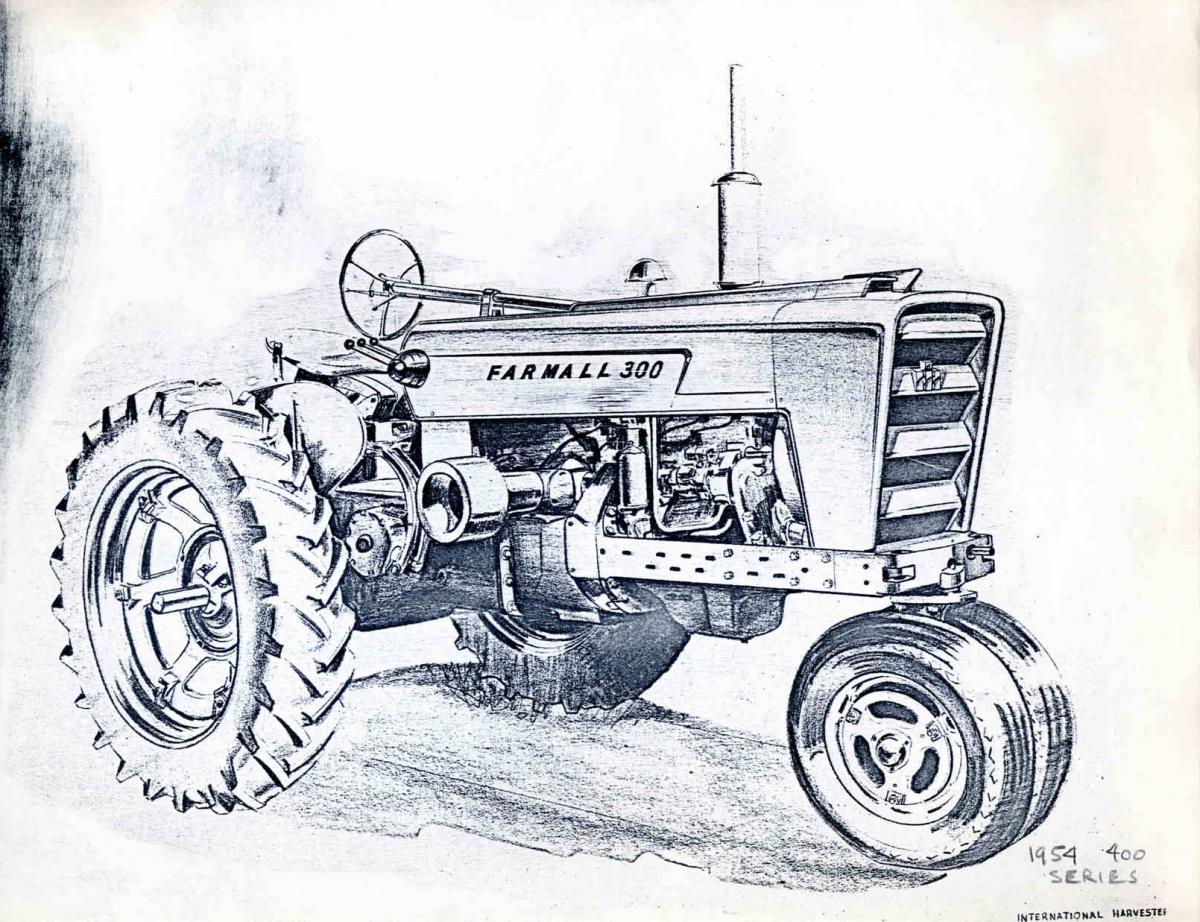
The square design that debuted with the 40 and 60 series was considered much earlier, as evidenced by this 1954 sketch. Gregg Montgomery collection
40 and 60 Series
By Guy Fay
In 1953, Mark Keeler became the head of the Agricultural Engineering Division for Harvester. One of the first things he did was to go on a fact-finding trip with product specialist M.O. Curvey. The two men visited several dealers to learn what they wanted to see in the next generation of International Harvester tractors. The answer from the first dealer they visited—Andy Anderson in Harvard, Illinois—was pretty straightforward: Anderson told them he wanted improved operator comfort and convenience.
After five years of hard work building IH’s next generation of new machines, Keeler and Curvey returned to Harvard in 1958 to offer the town a sneak preview of the new International Harvester tractor. Months before the official world introduction, Anderson removed the paper that shielded the tractor from prying eyes and drove it straight down Main Street in Harvard.
Harvester had planted cameramen from Harvester World magazine on the street and rooftops to catch the crowd’s reaction. The resulting article reported that one gentleman was so taken by the new tractor that he walked into a utility pole (the cameramen saved him embarrassment by not capturing that scene). Men and women gathered around to look the tractor over, to sit in the seat, and to start it up.
Comments focused on the comfortable new seat, the smooth new engine, and the revised control layout. The styling was improved, with redesigned lines avoiding the “Christmas tree” look of the previous models . Curvey admitted that there weren’t a lot of new pieces in the transmission (except for the relocated hydraulic pump), but the farmer who asked said that he had never heard of a farmer having problems with an IH transmission or differential anyway. Soon, the tractor was back on the truck, rewrapped in its paper disguise and on its way back into hiding until the new line’s official July 1958 introduction.
The assembly line changeover to the new models went very smoothly, and the dealer introductions held at the new engineering facility (and old Harvester Farm) in Hinsdale, Illinois, generated a tremendous amount of enthusiasm and orders. A large number of tractors went out the door very quickly.
And then the problems started.
While the model appeared to have an old rear end mated to a new engine, in fact there were a lot of not-so-apparent upgrades and advances under the skin. Though the tractors had been extensively tested, what appears to be a last-minute horsepower upgrade caused differential failures when the tractor was operated in areas with limited traction slip. In addition, IH had modified metallurgy to eliminate the traditional time allowed to age castings and normalize stresses, resulting in tractors with castings that changed shape ever so slightly after some use. The hydraulic system used the transmission as a reservoir, leading to issues with lubricant contamination and life. (This latter problem eventually drove the development of IHC’s famous Hy-Tran transmission fluid.) The four-cylinder 240 and 340 would go through some evolutions in their hydraulic control system to improve performance.
IHC eventually fixed the issues and the tractors still serve farmers today.
Farmall Cub
For 1958, the entire IHC line was updated. One of the least changed was the smallest of the lot. The Farmall Cub received a new grille, but the rest of the machine was pretty much unchanged. Even the early advertising for the 1958-style Cub referenced the 1956 test. Rated horsepower on the belt was 10.5, with drawbar horsepower coming in at 9.4 from the 60-cubic-inch gasoline engine.
The Cub was available with a “high and wide” attachment to increase crop clearance and also width. This attachment was available from the factory but could be ordered for older tractors, too.
Industrial dealerships offered the Cub as the International Cub. The International differed mainly in its model designation and nameplates, and its industrial features were in fact optional on the Farmall version. The low-profile International Cub Lo-Boy offered a lower center of gravity and height to enable it to fit into tight spots. The tractor proved very popular for mowing and for applications where the tractor had to be driven into older buildings. It was powered by the same C-60 engine as the Farmall Cub, the major difference being the front axle and the rear-axle housing, which was mounted on an angle instead of straight up and down.
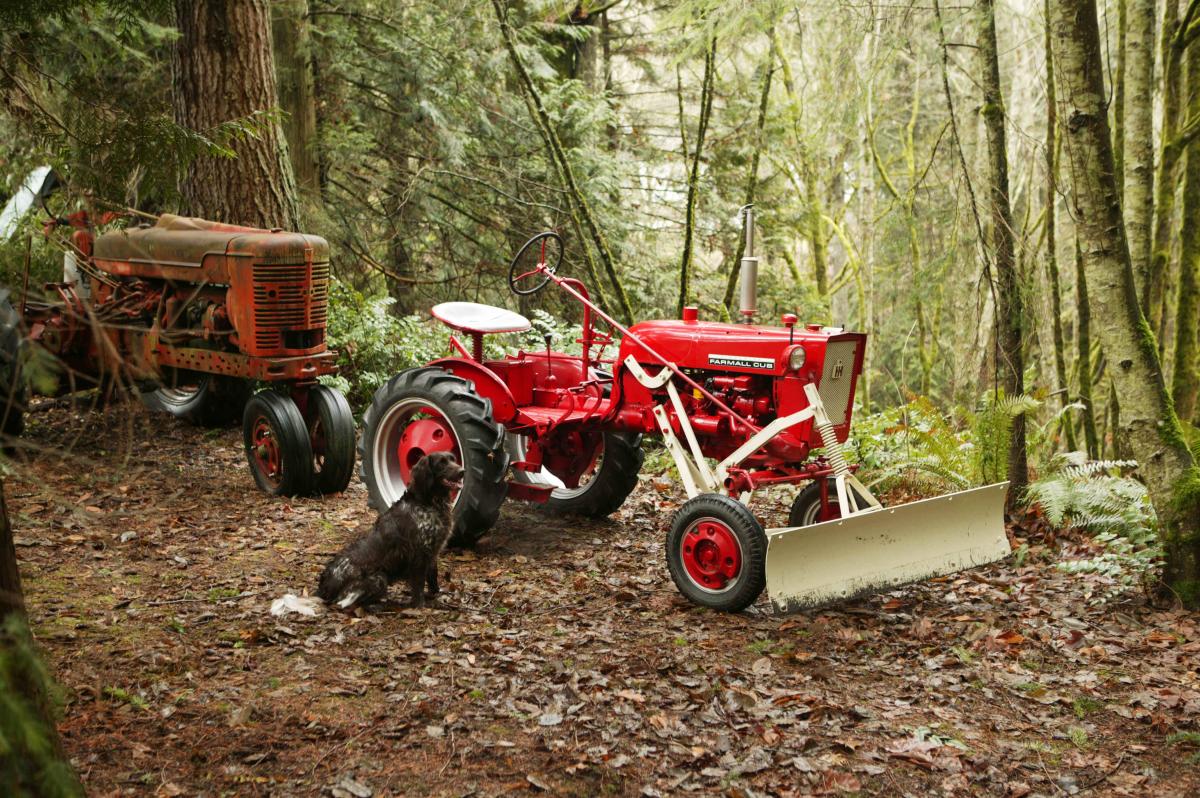
The Cub was updated with new sheet metal in 1963. This 1964 International Cub is a working collectible that owner Bob Bennett uses to plow snow with the blade, cut grass with a Cub 22 mower, and occasionally turn some soil with a tandem disk. Lee Klancher
Farmall 140
The Farmall 140 replaced the Farmall 130, mainly updating the sheet metal of the 40-60 series. The 140 retained the carbureted C-123 engine, and the tractor remained popular with farmers planting crops one row at a time and thus needing precision cultivation. It was also a maneuverable chore tractor.
The International 140 was the industrial version, its true difference being nameplates and decals that allowed sale through IH’s industrial dealerships. While the industrials usually had square front axles, foot accelerators, and yellow paint, the Farmall 140 could be ordered with those options, as well (in fact, for a fee, both tractors were available in any paint the customer wanted). The 140 proved popular with highway departments and other operators performing mowing and grounds maintenance, and also as a small towing tractor. The Farmall 140 High Clearance filled a need for producers of high-value crops, or crops that used bedding in single rows and would have brushed up against the bottom of the regular-height Farmall 140. They were popular with nurseries and truck farmers.
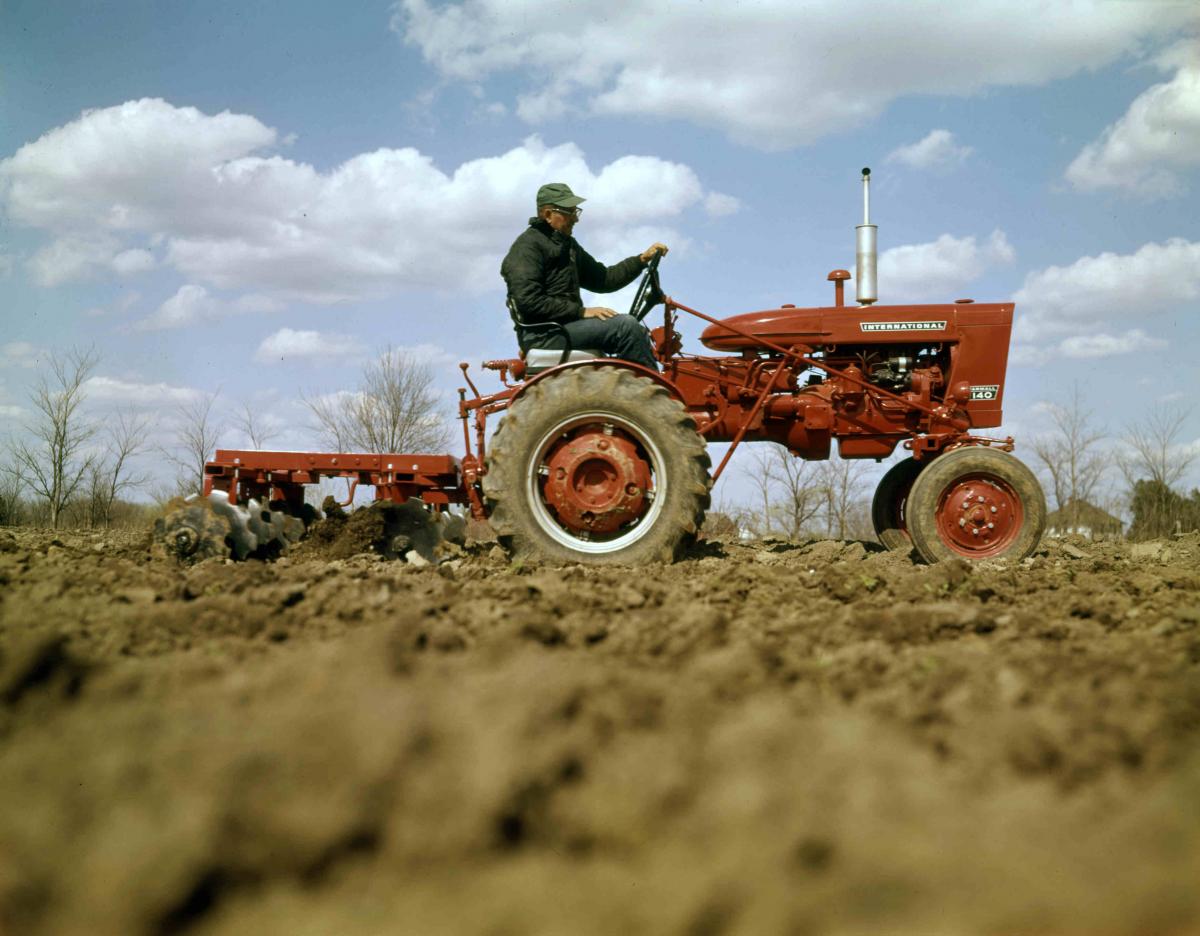
A Farmall 140 pulls a 122 disk harrow through a field in 1970. In the early 1950s, IHC research and development focused on tractors for the growing markets in urban areas. The 140 was used on large exurban properties and on small farms. CNH Global
Farmall 240
The Farmall 240 was the two-plow tractor of the new line, inheriting the role of the Farmall 230 with essentially the same 123-cubic-inch gas engine. A Hydra-Touch hydraulic system with an optional Tel-A-Depth depth control and new sheet metal were major features of these new tractors. Sales were not strong, however, due to most row-crop farms progressing toward higher horsepower and a large number of older two-row tractors still available.
The International 240 was a new market segment for IH: a small utility tractor. Compact dimensions and a layout that was easy to climb on and off helped yield sales considerably stronger than the Farmall version with the same C-123 engine and essentially the same driveline.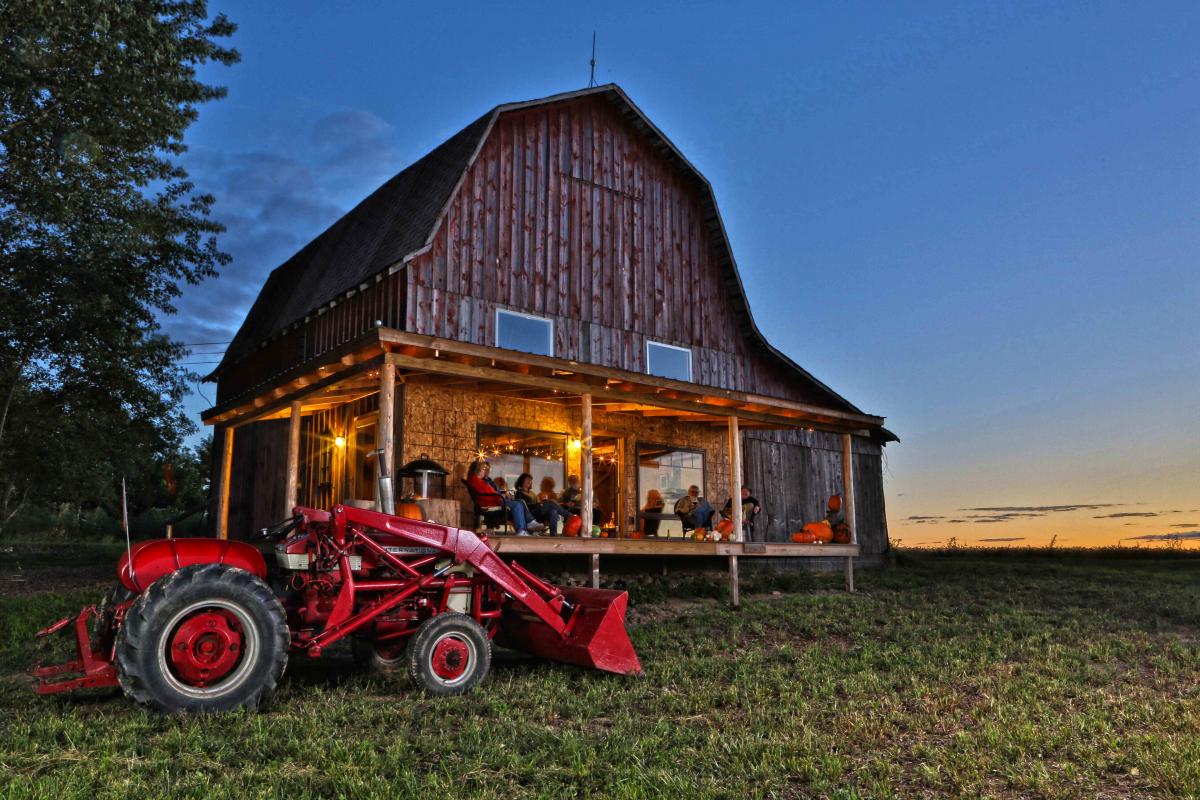
This International 240 still sees duty moving snow, cutting brush, and hauling firewood in central Wisconsin. Lee Klancher
Farmall 340
The Farmall 340 was a three-plow tractor. While not a new size, it was a new platform with a C-135 engine and a driveline with a Torque Amplifier, Hydra-Touch hydraulics with Tel-A-Depth control, two- or three-point hitches, and four-row cultivator capability.
Designed to mount a one-row cotton harvester, the Farmall 340 Cotton Harvester had higher clearance to accommodate the cotton plants, which were gone through several times as the bolls ripened.
The International 340 replaced the International 330 of the previous line. The 240, of course had the new C-125 engine, but with its intended driveline—a small maneuverable one with a Torque Amplifier to give it more speed options than in previous small tractors. The International 340’s small dimensions and maneuverable chassis, with the C-135 engine, were well suited for smaller orchard and grove operators, and IH produced the International 340 Grove with shields for those users.
The International 340 Industrial was a relabeled International 340. The tractor had a different grille and was usually packaged with industry-friendly options like a heavier front axle and a foot accelerator, although those options were also available on the International 340.
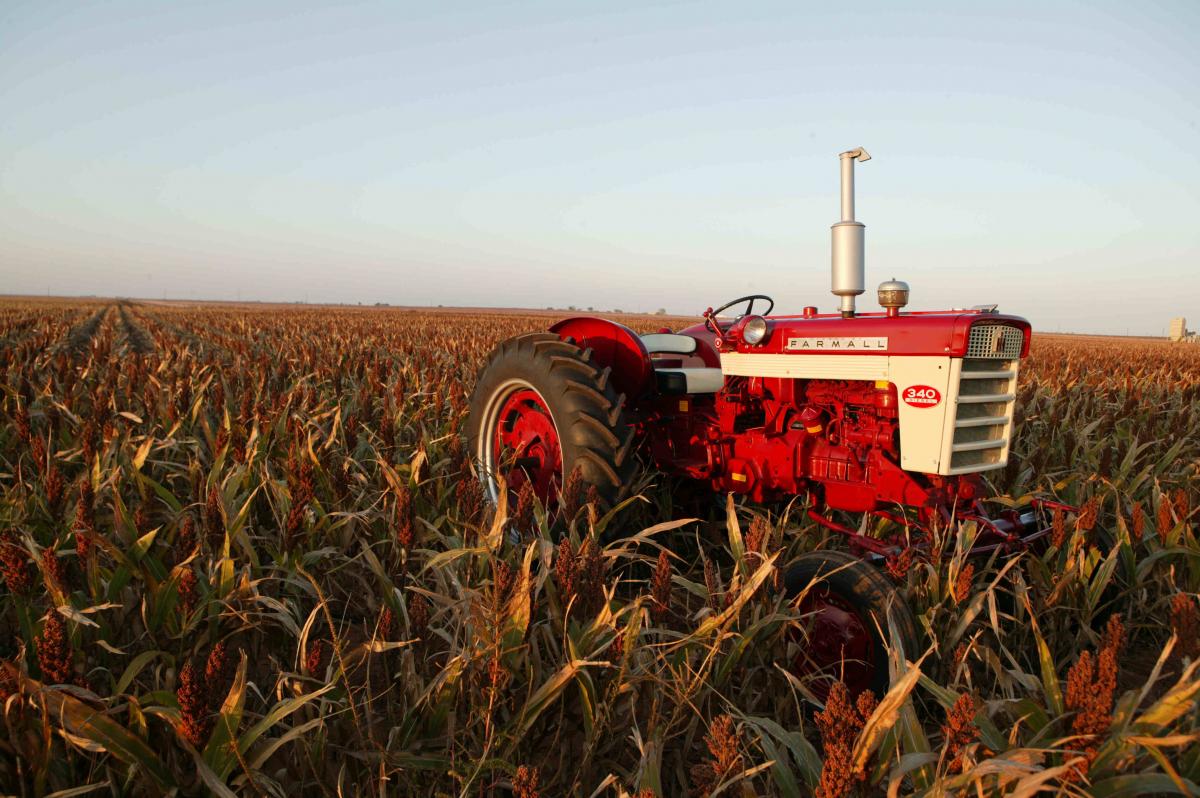
The Farmall 340 could be ordered with the standard five-speed transmission or with Torque Amplifier (TA), which provided ten effective forward speeds. This hardworking example owned by Jim Johnson of Abernathy, Texas, still does chores on the farm. Lee Klancher
Farmall 460
The Farmall 460 was the smallest of the six-cylinder tractors in the new line, rated for four plows. It was available in gasoline, diesel, LP, kerosene, and distillate versions. The 460 replaced the Farmall 350, but in addition to a six-cylinder engine it had redesigned sheet metal and very different hydraulics. The diesel had a direct-start system and was built by IH, unlike the 350’s Continental direct-start diesel or other IH start-on-gas diesels. The 460 suffered through the differential recall issues, and the diesel had a reputation for being hard to start on cold days.
The 460 Cotton Harvester was equipped with the gear drive higher drop housing (as opposed to the High Clear’s chain drive) and was usually shipped with the platform to allow reverse operation. The tractor was also equipped with a high single front wheel for cotton-picker operation, although usually another front-axle operation was available for normal use when not in the cotton field. IH offered factory-built cotton-harvester tractors as well as conversion packages.
The Farmall 460 was also available in a High Clear version for sugarcane and other specialty growers, and for use by other manufacturers as a platform for other machinery. The 460 showed up in a lot of bean pickers and blacktop pavers. The 460 High Clear had chain-driven final drives and a high-arch front axle.
The International 460 Utility replaced the 350 Utility, sharing the same six-cylinder engine and powertrain as the Farmall 460. The tractor’s layout made it the base of several optional models, proved popular as a loader tractor, and paved the way for more popular higher-power utility models. The Utility was available with a diesel or carbureted engine, the latter available in gasoline, LP, kerosene, and distillate versions. IH advertised that the International 460 weighed 1,000 pounds more than its competition, which obviated the need for additional weights and gave it better traction performance.
The International 460 served as the base for the 460 Grove, which was equipped with underslung exhaust and shields to move branches out of the way.
The International 460 High Utility featured a row-crop adjustable rear axle and wheels, and a higher-clearance front axle to give a low top height with under-tractor clearance. This was good for crops such as shade tobacco and ginseng, which had a canopy over the top of the crop but still required row cultivation (or clear beds) underneath the tractor.
The 460 Utility also served as a base for a Wheat Land version that featured wider fenders to protect operators from blowing dust, as well as other features that were optional on the regular utility but standard on the Wheat Land model. International advertised that, unlike most utilities, the 460 platform was also designed for heavy traction and that the 460 Wheat Land was up to the task of pulling large implements.
The 460 Industrial was badged and grilled differently for sale through IH’s industrial dealership network. Standard color for most of the production run was yellow, although customers could have the tractors with any color for extra cost.
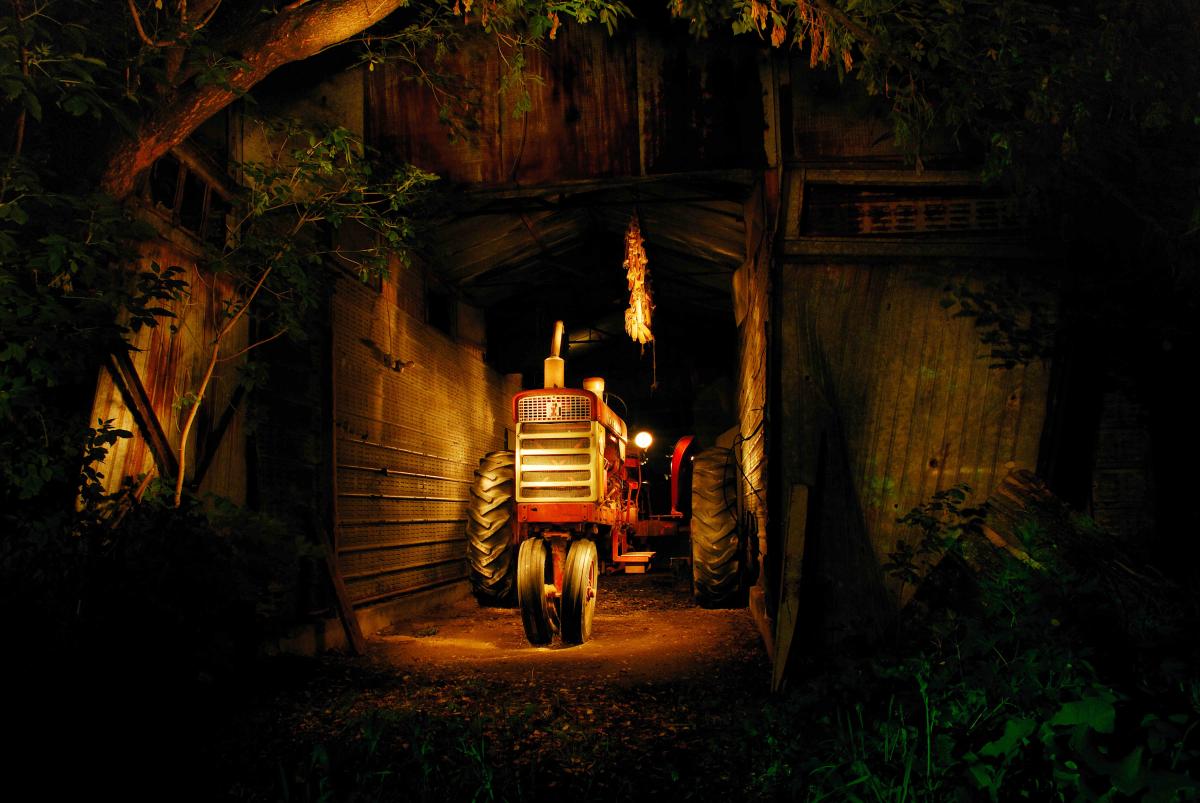
The Farmall 460 featured a six-cylinder engine previously used in IH crawlers, as well as a host of new features and improvements, including the new square styling. David Wheeler tractor collection / Mark Jenson photo
Farmall 560
The Farmall 560 replaced the Farmall 450. The 560 featured a new six-cylinder engine and other changes consistent with the new 40 and 60 series line. The 560 was available with gasoline (including kerosene and distillate subvariants), LP, and diesel engines. The diesel was now a direct start, instead of the IH-built start-on-gas diesel used in the 450. Maximum drawbar horsepower on the gasoline version was 58.36, but the two-hour rating was 44.83.
The High Clear 560 used drop rear-axle housings and chain drive similar to the 450, as well as different front axles, wheel, and tire equipment. The tractors were used in sugarcane-growing areas, with vegetable crops that required higher-clearance tractors, and in other similar specialty farming.
The Farmall 560 Cotton Harvester variant had gear-drive extended final housing and a single high front wheel, as well as a platform for reverse running with a mounted two-row cotton picker. Users could obtain a package to convert the tractor to a front-running normal-height tractor for the rest of the year when not under a picker. Cotton-picker tractors could be ordered from the factory, or an existing tractor could be converted.
The International 560 used the same engine selection and mostly the same driveline as the Farmall 560 in a standard tractor layout. The full range of engine choices was available along with large rear tires giving more drawbar pull than the Farmall. IH’s diesel engine was direct-start, where the standard engine choice for the Deere 830 had a pony motor for starting the diesel and still cost more per horsepower than the International.
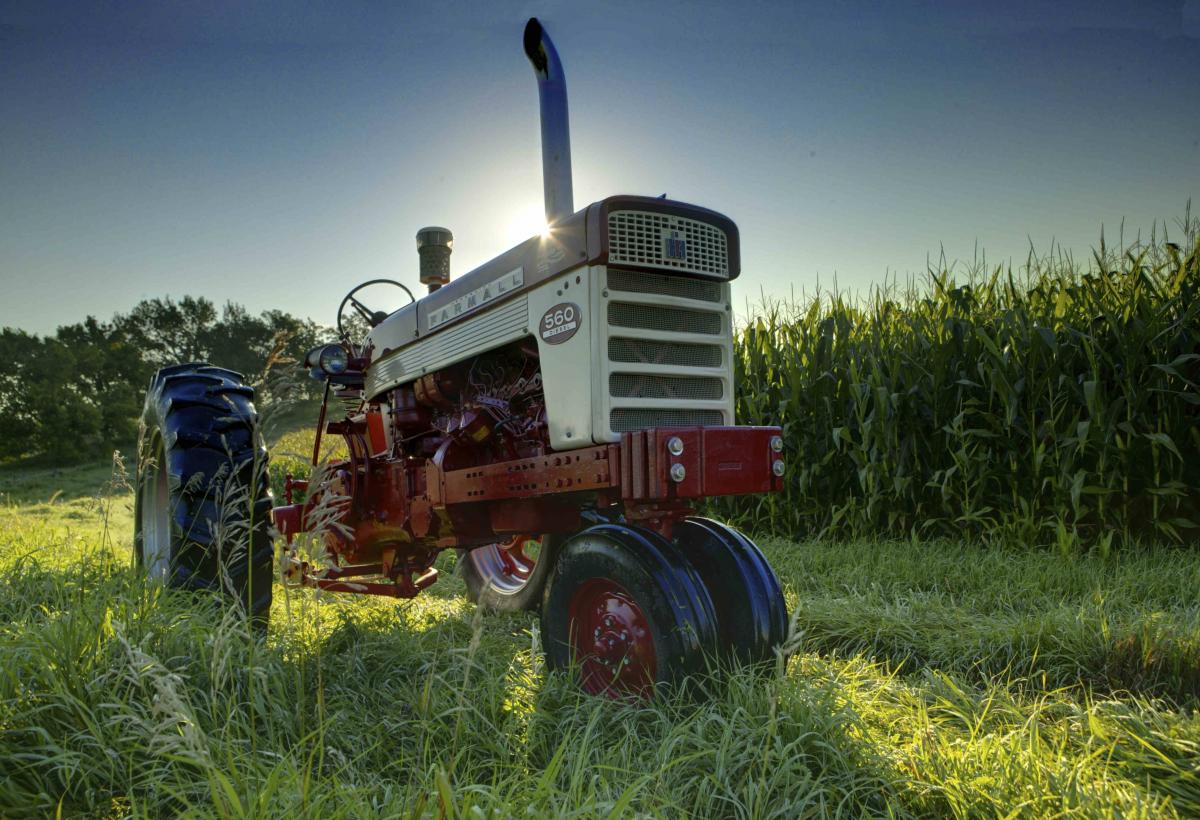
The Farmall 560 introduced new hydraulic systems designed to improve field performance. These included Tel-A-Depth linkages to control implement depth, several choices of hydraulic pumps, and one, two, or three connection valves. Jerry Mez tractor collection / Lee Klancher
International 660
The International 660 was essentially the same tractor as the International 560, revved up to give considerably more horsepower. A standard tractor intended for heavy tillage, the 660 came up against many of the same problems with transmission longevity as the 460 and 560 family. After the problems were worked out, the tractor proved reliable in wheat fields, often equipped with options such as a hand clutch and foot pedal Torque Amplifier to allow standing while operating.
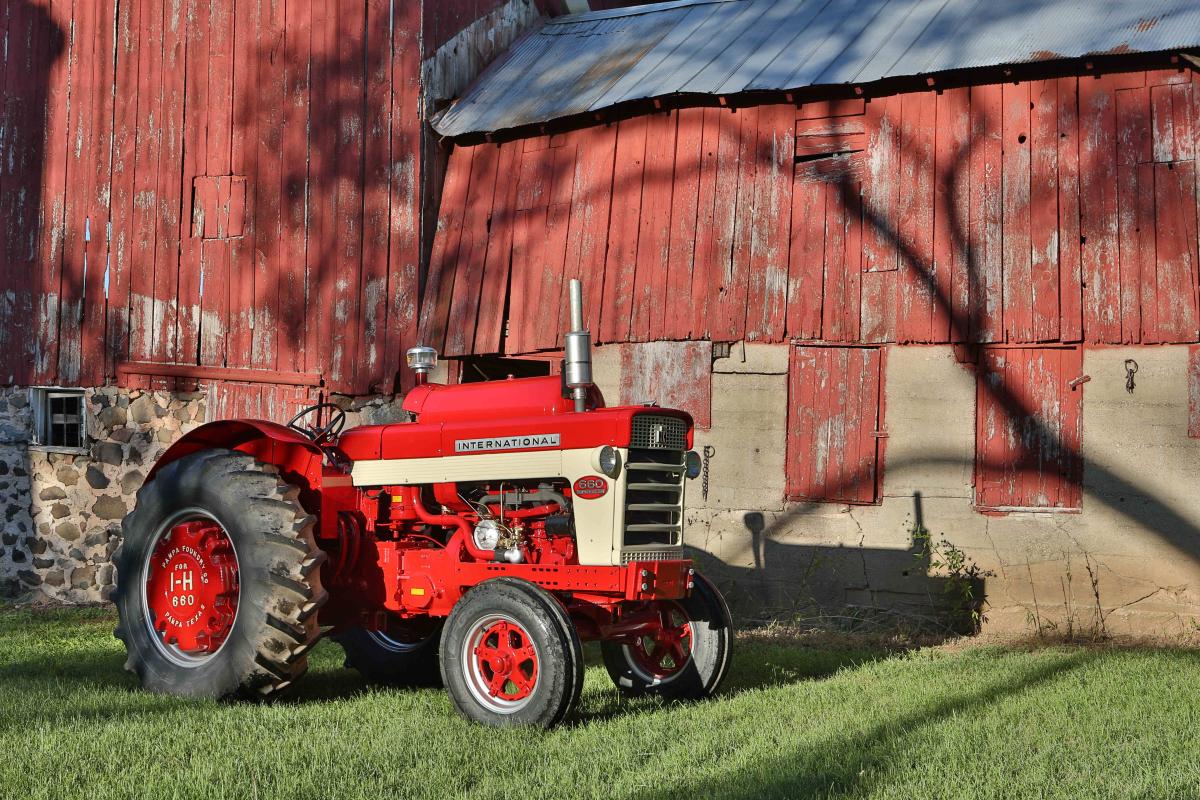
The International 660 was the heaviest in the 60 line. Other than higher horsepower,the machine was very similar to the 560. This LP version is equipped with unique IH wheel weights. Huber Brothers tractor collection / Lee Klancher
British IH Tractors: 1947–1957
By Martin Rickatson
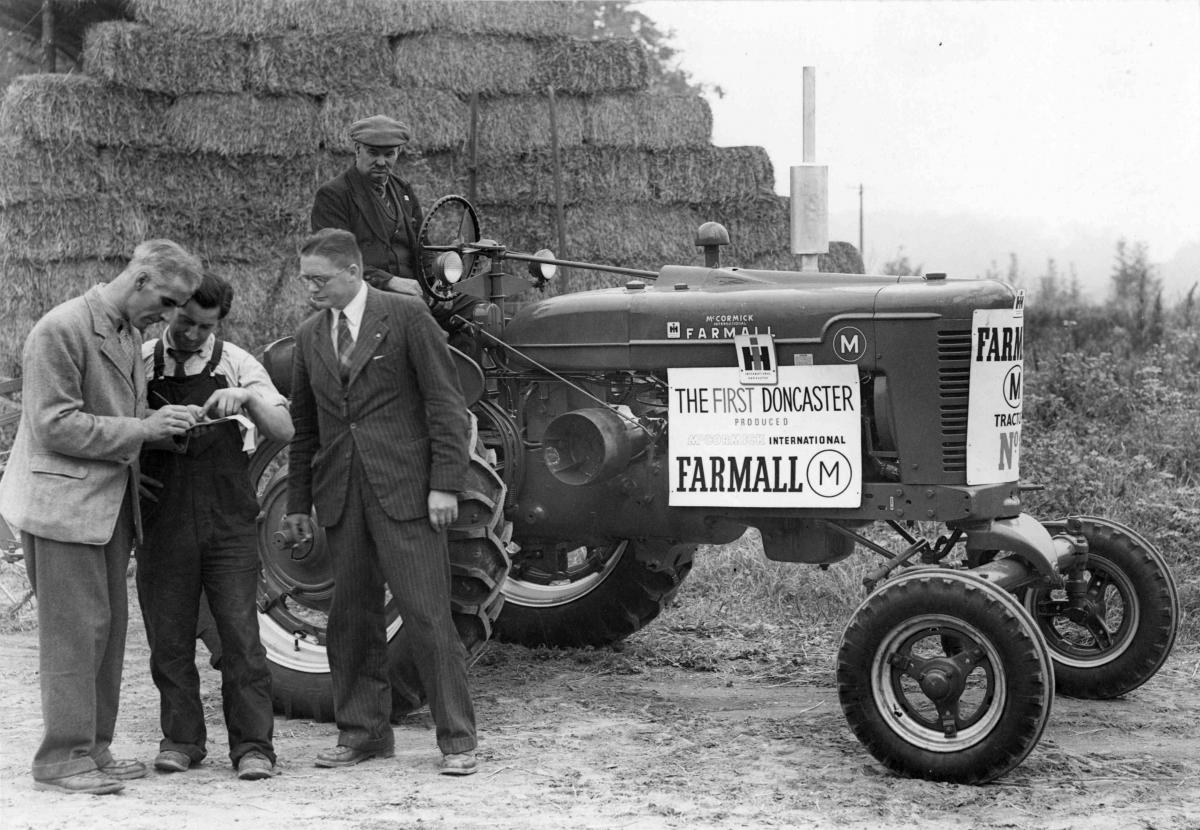
The first Farmall M produced at the Wheatley Hall Road, Doncaster, plant in England was delivered in 1949 to Alan Neale, the son of former IH Great Britain chairman Arthur Neale, who, following his retirement, turned to running his own 1,200-acre farm near Cambridge. Farm and tractor are still in the family. Wisconsin Historical Society / 24762
International Harvester Company of Great Britain (IHGB) was founded on December 31, 1906, with offices in London. It wasn’t until 1947, though, that the firm began manufacturing machinery in England, at a factory at Doncaster, 170 miles north of the capital.
In September 1949, the first Farmall M tractors rolled off the Wheatley Hall Road production line, while a second IHGB tractor plant opened in 1954 in the nearby town of Bradford. In 1964 IH added a second Doncaster plant, at Carr Hill. The Bradford facility closed in 1982, at the height of IH’s financial troubles, while the Wheatley Hall Road and Carr Hill factories in Doncaster transferred to new ownership in 1985, with Tenneco’s purchase of the IH ag group. Wheatley Hall Road continued to produce tractors and components (alongside the former David Brown/Case plant in nearby Meltham) under the Case-International/Case IH banners, while Carr Hill, which had been mothballed in 1983, reopened as a component plant in 1986.
Meltham closed in 1988, but the Wheatley Hall Road factory in Doncaster continued to produce Case IH tractors until Fiat’s purchase of Case Corporation and the subsequent forced divesture of the Doncaster plant in 2000 to ARGO, purchaser of the McCormick brand. Carr Hill, which had reopened to produce components, was also sold, to Italian transmission company Graziano.At the end of 2007, ARGO closed Doncaster and moved McCormick tractor production to its Landini factory in Italy.
McCormick International B-250 and B-275
Production of IH tractors in the UK began in 1949 with a British version of the Farmall M, but by 1958 engineers at IHGB had designed a range tailored specifically to the needs of UK and continental farms, where fields are smaller and roads narrower than in North America, and row crops are not as widely grown as cereals and grass. The following year, exports began to North America to meet the growing demand for smaller farm-chore tractors.
Built in the IH Bradford factory, the smallest of these, and the first to be introduced, was the B-250, launched in its home market at the end of 1955 at the Royal Smithfield Show in London’s Earl’s Court.
Designed to offer a pint-sized alternative to the likes of the Fordson Dexta and Massey Ferguson 35, the B-250 was small, nimble, and lightweight. Despite its size, it was comprehensively equipped, with a specification that included live hydraulics for uninterrupted flow, inboard disc brakes, differential lock, and an automatic pickup hitch (although not all of these features were offered in overseas markets). The 30-horsepower, four-cylinder diesel tractor put its power to the rear wheels via a five-forward/one-reverse gearbox.
Three years later the B-250 welcomed a bigger brother: the B-275. Of a similar design, the larger tractor not only produced an additional 5 horsepower from a tweaked version of the same BD-144 engine, but incorporated an eight-speed transmission that combined a four forward/one reverse gearbox with a high/low range to double the number of available speeds.
The two tractors were notable in U.S. export form for their dual badging as International McCormick tractors, as compared with U.S.-made machines, which were branded McCormick if in row-crop format and International if conventional.
McCormick International B-276
The B-276, a refreshed and restyled version of the B-275 with a new white and darker red hood, succeeded the B-275 in 1968 and was produced until 1974 in both diesel and gas variants. Driver comfort was enhanced with repositioned controls and a better seat, while ease of servicing was also improved thanks to a front-mounted air cleaner that could be accessed through the removable radiator grille.
McCormick International B-450
Debuting in 1957, with production commencing the following year, the B-450 was a very different beast than the other IHGB tractors. Essentially a restyle of the BWD-6, it remained in production until 1970, despite its elderly appearance.
The tractor’s four-cylinder, indirect-injection BD-264 diesel produced 55 horsepower at the flywheel, driving through a 5F/1R gearbox. Like its IH contemporaries it incorporated features rarely seen in North America at the time, such as a differential lock and disc brakes. There was also a weight-transfer response-control system that allowed the weight of soil-engaging implements to be progressively transferred onto the tractor’s back wheels to improve traction. The system operated in two stages, with the first two-thirds acting to transfer weight, and the last third raising the machine out of work.
German IH Tractors: 1908–1959
By Matthias Buschmann & Johann Dittmer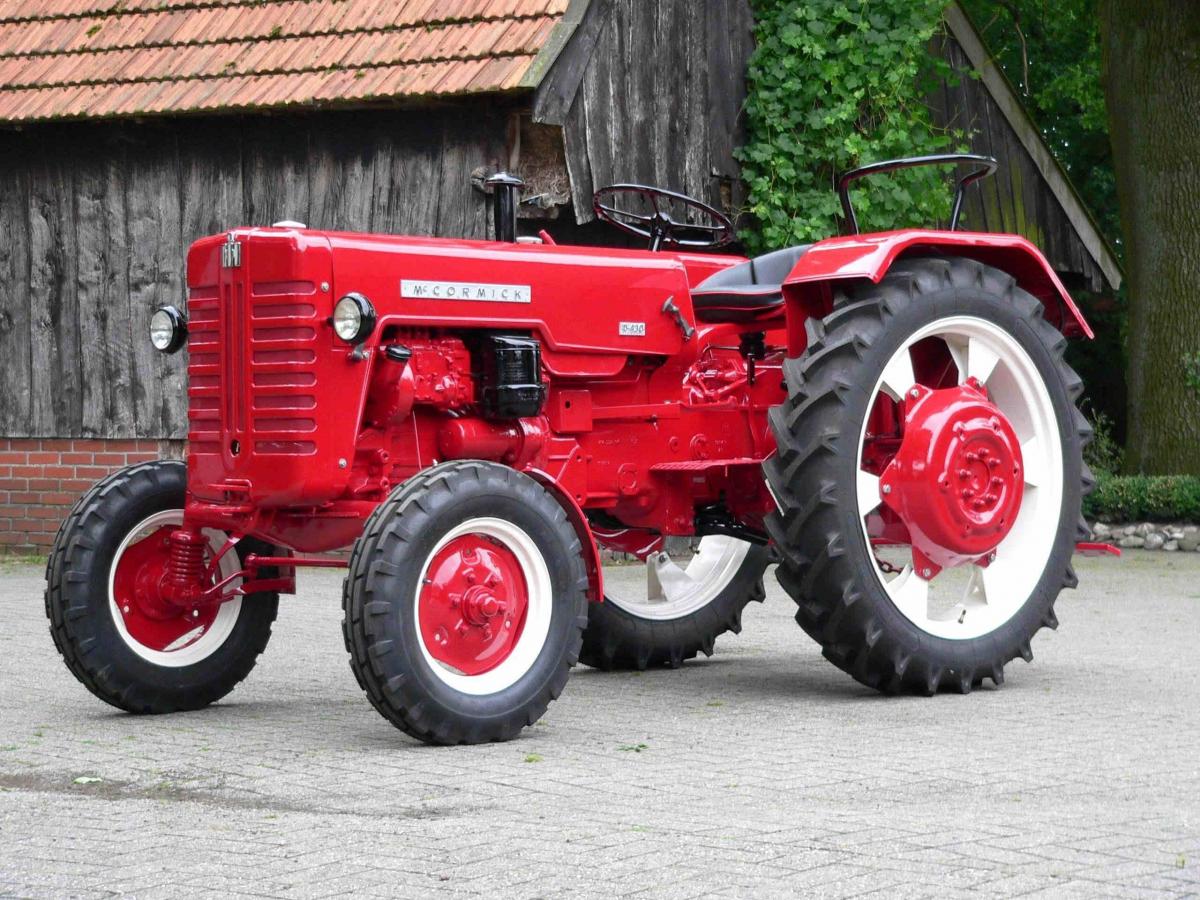
McCormick Model D-430. Mattias Buschmann collection
Both Deering & McCormick opened sales branches in Germany in the 1880s, which IHC operated after forming in 1902. Growing demand for agricultural machinery in Germany, combined with the introduction of burdensome new taxes on foreign imports, led to IHC headquarters in Chicago establishing a new production facility in Germany. Precedent for this expansion had been set by similar efforts underway in Sweden and France.
In 1908, IHC established International Harvester Company GmbH in Germany, based at Neuss am Rhein. The company purchased 100,000 square meters of land in the Neuss Harbor district in 1909 and construction began the following year. The production sites were designed and built to standard IHC specifications while the location was chosen for its access to the Rhein River, allowing for direct supply of raw materials and shipping of finished products.
Beginning in 1911, the Neuss plant began manufacturing hay tenders, hay rakes, mowers, reapers, and fertilizer spreaders branded and sold under the Deering & McCormick name. The Neuss plant would produce various machines and tractors under these two brands until 1948. In 1914, facilities were expanded with the addition of a spinning mill established to supply twine fabric material. During World War I (1914–1918), IHC Neuss suffered from severe personnel and raw materials shortages. The plant was also forced to halt production for three months during the spring of 1924 due to the occupation of the Ruhr Valley by French forces. The worldwide economic depression that followed was overcome with the assistance of American loans. Having survived great turmoil, IHC Neuss celebrated its twenty-fifth anniversary in 1934 with total production of more than 45,000 agricultural machines.
Beginning in January 1933, the nationalization movement in Germany had a grave impact on businesses and hit foreign companies hardest of all. Starting in 1935, exorbitant taxes placed on foreign-built tractors made their importation financially unviable. The goal of the Nazi regime was to establish complete independence from foreign imports. Given these burdensome new taxes, IHC shifted Neuss production from agricultural machinery to tractors. Construction of new tractor production lines began in 1936, with the delivery of production equipment and technical know-how once again made possible by loans from American creditors. In May 1937, the first Model F-12-G and I-12-G tractors began rolling off the production line. (The G in the model name was short for Germany.) The adaptation of the F-12-G for the German market called for an increase in power delivery through the power-takeoff shaft and pulleys. The first FG and FS models were delivered in 1940. The FG came with rubber tires and the FS was equipped with steel wheels.
Due to fuel shortages and a ban on gasoline use in civilian vehicles, the Neuss plant began converting existing tractors to run on wood gas (a form of syngas) in 1943. Two models, the HS and the HG, were built from 1943 to 1944, comprising a total of 144 units.
By the time World War II neared its end, roughly 70 percent of the Neuss plant had been destroyed by allied airstrikes. In March 1945, Neuss am Rhein was captured by the 83rd U.S. Infantry Division and the 330th U.S. Infantry Regiment. Reconstruction began in May 1945 under British occupation, and with funding from IHC in Chicago. IHC’s investment totaled $17 million, a shockingly high figure for its time. Following the withdrawal of British troops in November 1945, the Neuss plant was granted permits allowing for emergency production of urgently needed replacement parts. By August 1946, the first Model FS and FG tractors once more began to roll off the production line.
In 1949 and 1950, the FG and FS tractors were updated again, with a new aero-fairing and hallmark bright-red paint. The most substantive shortcoming, however, remained the carbureted gasoline engine, which made the tractors increasingly difficult to sell. A diesel engine was vital to restoring sales. With the development of their new diesel motor still under way, IHC Neuss turned to an outside company, MWM, as a last-minute supplier of the diesel motors fitted in the FG-D2 model.
In November 1950 Neuss introduced its first in-house, self-starting diesel motor in the DF25 model, the last tractor built in the Neuss plant to be branded under the name McCormick-Deering, the dual-marque name used on Neuss-built machines from 1948 to 1951. The DF25 was based on the same chassis as older F-type models. Nonetheless, it represented a significant improvement to all substantive components, including motor and drivetrain.
Despite progress with their new diesel motor, IHC Neuss only produced a single tractor with an available 25 horsepower. This was unacceptable given the evolving demands of the German agricultural industry. Moreover, IHC’s competitors offered a wide variety of options in this power range. In response, Neuss began work on a new line that would come to include the DLD2, DED3, and DGD4. These tractors were available with 12, 20, and 30 horsepower in two-, three-, and four-cylinder diesel configurations. In total, more than 22,000 units were built across the three models. These original models from the first generation D-Line became the basis for all tractors that were built from 1956 to 1966 and designated as part of the second-generation D-Line.
Second-Generation D-Line, 1956–1962
In February of 1956, IHC Neuss introduced the completely re-worked second generation D-Line with new styling and improved equipment. In order to meet market demands, the model assortment had been expanded as well. Among the two- and three-cylinder motors were versions with 82.6 mm bore, 87.3 mm with the same stroke of 101.6 mm. The new Farmall tractor line included the two-cylinder D-212 and D-217, the three-cylinder D-320 and D-324 and the four-cylinder D-430.
Model Cylinders Horsepower Displacement
D-212 2 12 66-ci
D-217 Farmall 2 17 74-ci
D-320 3 20 99-ci
D-430 4 30 132-ci
In 1958 the standard model line was extended to include the D-214 and D-217 as well as the 40-horsepower D-440, all fitted with roots-type superchargers and produced only in 1958-59. In 1959, the model range was further expanded with the introduction of the 36-horsepower naturally aspirated D-436.
Model Cylinders Horsepower Displacement Aspiration
D-214 2 14 hp 66-ci Natural
D-217 Standard 2 17 hp 74-ci Natural
D-440 4 40 hp 132-ci Supercharged
D436 4 36 hp 148-ci Natural
Both the Farmall D-212 and Farmall D-217 were well suited for use with mid-mounted accessory equipment. The use of gantry axles on the drivetrain allowed for high ground clearance. Given the falling demand for tractors designed for use with accessory equipment, these two tractors were replaced by IHC after 1958 with the D-214 Standard and D-217 Standard models. One can also note the change in model designation; Farmall was dropped from the model number and Standard was added after to it. As plans for the development of new tractors became a priority, IHC began to forgo the use of the famous Farmall brand name. With production of the subsequent model line, tractors came equipped with a 6+1 speed transmission. From 1957 on, the term Agriomatic was used to describe tractors which had 20 (or more) horsepower and an 8+2 speed transmission. Besides the additional gear ratios the new transmissions featured a wear-resistant multi-disc clutch, which improved both the shifting procedure as well as power takeoff engagement. Given the advantages, IHC began delivering a more and more of its tractors with this superior new drivetrain. Most of the tractors were equipped with hydraulics and three-point hitch linkage. It was also common for tractors to be fitted with McCormick-branded side-mounted grass mowing units, which were prized for the strong reputation of their cutter-bars. Due to popular demand, IHC dealers often fitted front loaders and weather protective canopies as well.
French IH Tractors: 1900–1959
By Jean Cointe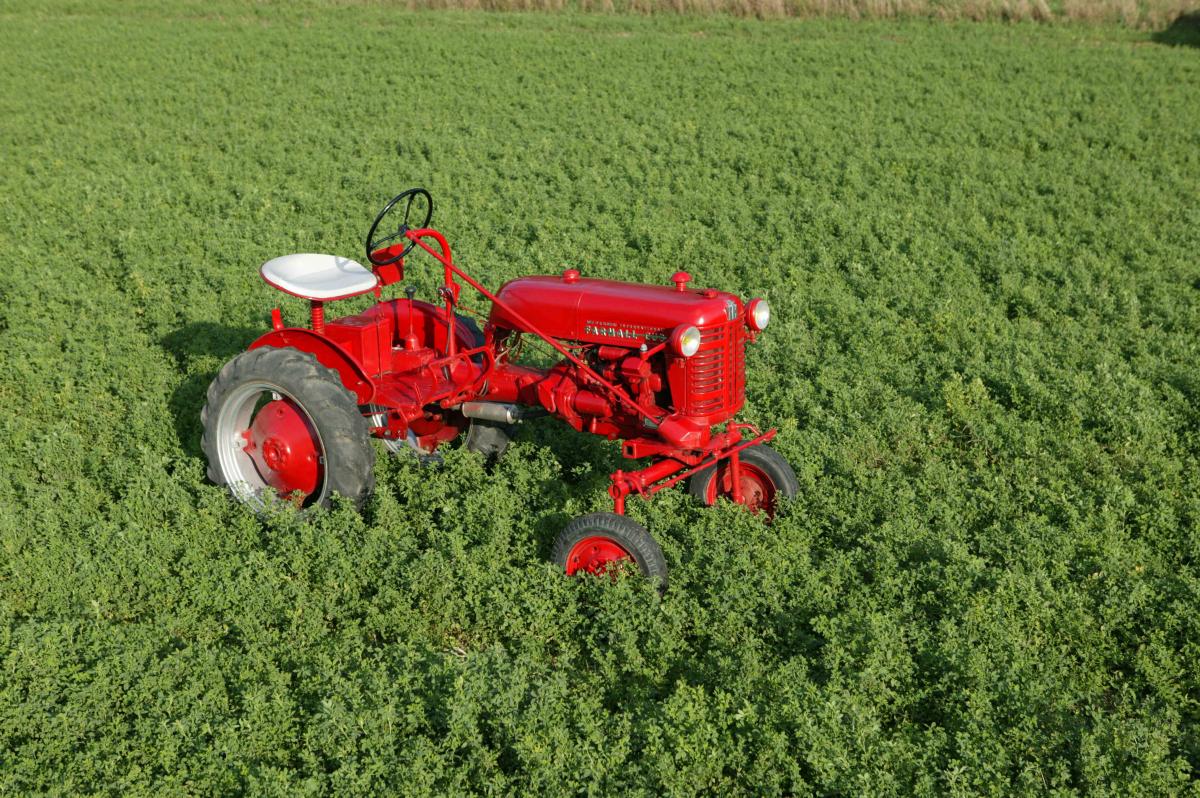
This Farmall Cub was assembled in 1955 at the IH plant in Saint-Dizier, is badged CIMA, and uses a Solex carburetor, which gave it 1.25 more horsepower than the American version. The French Cub was built from 1955 to 1957, when it was replaced with the French Farmall Super Cub produced until 1964. Lee Klancher
Cyrus Hall McCormick had a long history of traveling to Europe to demonstrate his company wares. He had great success in Paris at the 1855 Universal Exhibition, where he won a gold medal facing seven competitors in the Trappe farm field show. In 1867, the McCormick reaper won the grand prix of the Universal Exhibition. Later, the French awarded him the prestigious honors of chevalier (1868), then officer of the Légion d’honneur (1878).
McCormick constantly increased his company’s sales in France with the help of two French businessmen, Wallut and Faul. After International Harvester Company formed in 1902, the French branch known as Compagnie Internationale des Machines Agricoles (CIMA) was incorporated in 1906 and dedicated mainly to the Deering and Osborne brands. Wallut distributed IHC products under the McCormick name, while the Faul family company distributed the Deering brand until 1911.
In 1934, CIMA and Wallut merged, with the new company managing the entire business of IHC in France and continuing to operate two networks that sold Deering and McCormick products. In 1939, CIMA-WALLUT reached the top of the farm implement industry in France, employing more than 5,000 people. In 1948 CIMA-WALLUT merged with the McCormick and Deering networks and sold its products under the McCormick-Deering brand, dropping the WALLUT name.
In 1950, CIMA purchased a large farm implement factory at Saint-Dizier in the east of France. The facility was equipped and modernized, partly with U.S. dollars provided by the postwar Marshall Plan in 1949. Farmall C assembly started there in 1951, with all the components probably being shipped from the IHC Louisville Works.
Early in 1952 the Farmall Super FC rolled off the factory’s assembly lines. This tractor was fitted with an American-built C-123 engine while the rest of the components were French-made. The diesel-powered Farmall FCN was introduced later that year.
In 1953, the French company was given full industrial independence: gasoline and diesel engines came to be entirely built at the factory. The Super FCC (carbureted) and Super FCD (diesel) tractors were available in three different tread widths: the Farmall tricycle, the standard-tread utility, and the narrow-tread vineyard.
The first Farmall Cub tractor assembled in France rolled off the factory assembly lines at Saint-Dizier in 1956, followed a few years later by the first French-built Farmall Super Cub.
In 1957, the Saint-Dizier factory presented the new 235 line, available in the Farmall, utility, and vineyard versions. Those models were improved versions of the FC line, the most substantial difference being a modern hydraulic lift with a new design known as the Modulor.
In 1958 the new French Farmall F 335 D, a direct offspring of the American 350D, was unveiled. Its new features, such as the Torque Amplifier and a power takeoff with a multidisc hydraulic clutch, were still unheard of in France. The engine of the Farmall 350D—a Continental G-193—was replaced in Europe by a diesel Hispano-Suiza engine. But as the social and political climate in France deteriorated early in 1958, IHC canceled the project.
On September 10, 1958, a new line of tractors was unveiled to the company’s executives; the F 245 series became the F 265 series a few months later. Also in 1958, the Farmall 135 D was introduced and became a bestseller in its class, upgraded with the F 137 D model and produced until the end of 1964.
Australian IH Tractors: 1903–1959
By Sarah Galloway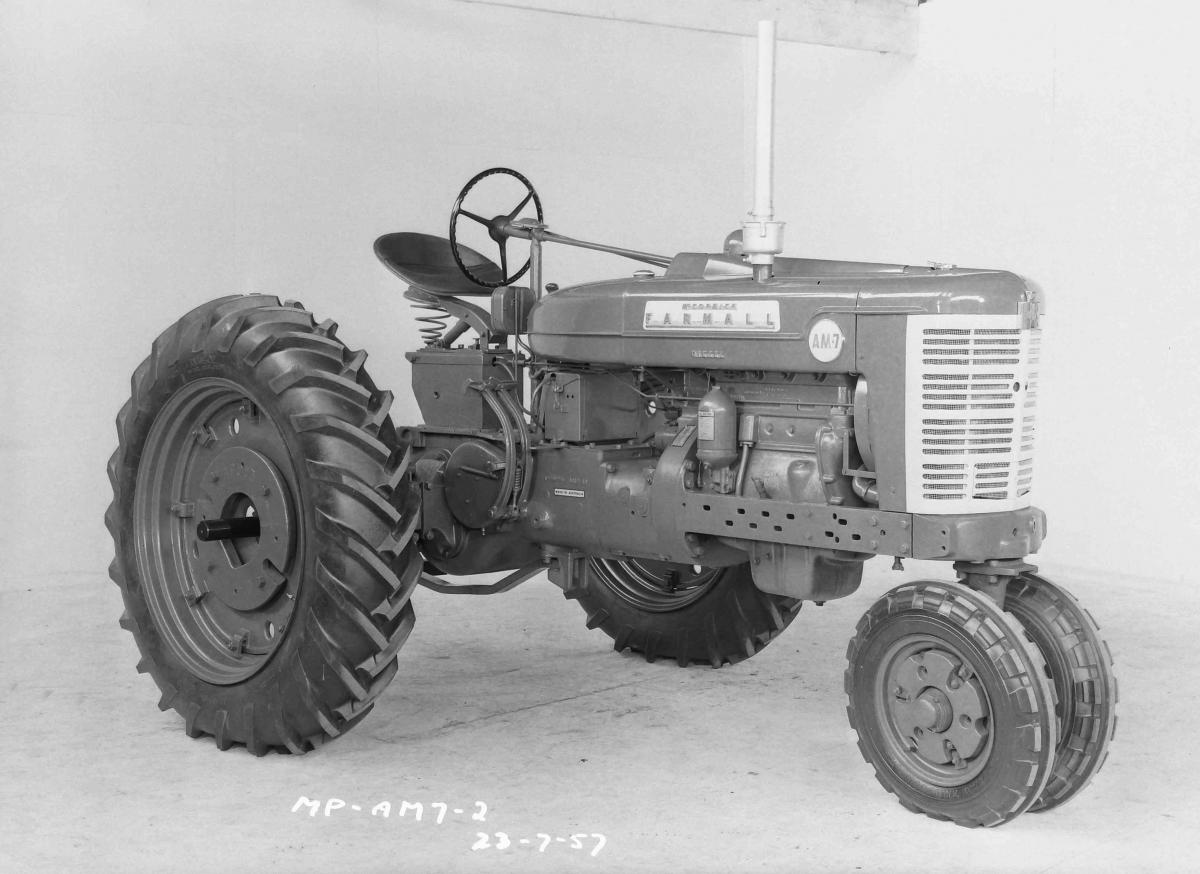
Farmall AM-7. R. Devlin collection
In 1852 the first McCormick reaper arrived in Australia, 21 years after Cyrus Hall McCormick had demonstrated his reaper to a skeptical gathering at his father’s farm near Steele’s Tavern, Virginia.
Two separate organizations, one selling McCormick and one Deering, formed in Australia in 1884. In 1903, a year after the Deering and McCormick merger that formed International Harvester, International Harvester of America (IHCA) registered for trading in Australia. By 1904 not only was the company selling their own farm implements, engines, and vehicles, but they were also sole agents in Australia for Buffalo Pitts steam engines, Chattanooga reversible disc plows, Cockshutt plows, Deere plows, Oliver plows, Sanders disc plows, and Zealandia milking machines.
IHCA headquarters were established in Melbourne in 1904. All International Harvester goods were sold from this building, as were their agency lines. Many other buildings in and around Melbourne were occupied as company’s needs expanded into motor-truck assembly, service, spare parts, showrooms, and other aspects of operating a large company.
IHCA assembled most of their imported components into tractors in Spotswood, a small suburb just outside of Melbourne. The company sent these imported implements and tractors from Spotswood all over Australia until Geelong Works was opened in 1939.
On June 26, 1912, International Harvester Company of Australia Pty. Ltd. was created. A memo stated that as of “July 1, 1912, all the assets owned in Australia prior to that date, have been purchased by International Harvester Company of Australia (IHA). This includes all the Company real estate, personal property, promissory notes and accounts and its rights and benefits under all contracts, agreements and leases.”
The success of importing machinery lasted until the worldwide economic depression of the 1930s when the Australian government imposed heavy import duties on farm machinery. As this was IHA’s main trade, sales were greatly affected and resulted in renewed efforts to find and establish their own factory. Until this time, parts for implements, as well as whole implements, had been made for IH at several different locations. These arrangements created a potential problem as manufacturers were not above copying IH designs and selling them as their own, with few, if any, changes.
In January 1937, a team of four IH executives from Australia and the United States scoured the country looking for a suitable place to build the IH factory. The major criteria for a good site were quality roads and rail and water access. The Geelong site was purchased on September 29, 1937, and construction was underway soon after the first sod was turned on July 19, 1938. In December 1938, four months after construction started on the Geelong Works, the first iron was poured at the foundry. The plant officially opened May 22, 1939 and employed 216 people.
Company headquarters were also relocated in 1939, to City Road, South Melbourne. This consolidated the company’s many facilities scattered around the Melbourne area into one location with convenient access. The newly leased premises were within half a mile of the main city center.
Early in 1940, the Commonwealth Government exercised its right to utilize the services of the plant and its workforce. Geelong Works became a large contributor to the war effort, manufacturing guns, tanks, shells, aircraft, and other materiel, though Geelong continued to produce lines of farm equipment to help feed the thousands of soldiers overseas. Engineers at the works were able to develop equipment for large-scale vegetable production during the war. As a result, many new lines of vegetable equipment were available in Australia. At the end of the war, Geelong Works was reverted to an agricultural manufacturer. The company realized that Australia was a country with huge potential and poised for a gigantic industrial revolution.
In 1947, plans were completed and construction begun to double the size of the factory, by now manufacturing tractors, trucks, and power units. In addition, the headquarters in Melbourne were purchased in 1948, ending a ten-year lease.
That same year saw the start of another expansion to the International Harvester line. Fifty-six acres were purchased in Dandenong for the manufacture of passenger, military, and over-the-road trucks. Dandenong became the second IH plant in Australia and home to truck manufacture.
During all this expansion, work continued for employees building implements, tractors, and other equipment. Tractors still were imported from overseas, although the works now had the ability to cast some of their own parts using dies from the United States. For a tractor to qualify for Australian-made status, a certain percentage of its components had to be locally designed and made. On April 15, 1948, the first Australian-made tractor, the AW-6, rolled off the production line. It was soon found in every part of Australia and New Zealand and working on every imaginable project, from agriculture to road construction to heavy industry.
On the truck side, demand was so great that the trucks were temporarily produced at Melbourne’s City Road headquarters while the Dandenong site was prepared. The first mass-produced Australian-made truck came off a temporary assembly line on August 3, 1950. On August 4, 1950, a ceremony to begin construction of the Dandenong Works—the city’s first major industry—took place. Construction moved quickly and an official opening ceremony was held on June 27, 1952—four months after the first trucks begun production at the plant.
Back at Geelong, another great moment was celebrated on September 11, 1952, when the 10,000th tractor was built at the works. A Super AW-6 tractor was driven off the assembly line by Minister for Trade and Customs Sir John McEwen. The first Australian diesel-powered tractor, a Super AWD-6 was built in 1954.
Improvements were continually made at Geelong as technology improved and demands increased. With the peak number of employees in 1952 of 2,578, an industrial relations center was established in 1954 to look after employee needs. Soon after, a medical center was added and a company doctor appointed. Another major upgrade came in 1956 with the opening of a new cafeteria that seated 560 people and served employees hot three-course meals. Mr. H. McKim recalls that even if you brought your own lunch you were expected to eat in the cafeteria. Thus IHA maintained a family atmosphere.
International Harvester expanded again on July 14, 1958, when it took possession of Fowler Engineering Pty. Ltd. for the manufacture of construction and earthmoving equipment in Australia. The smallest of the three works at just over 7 acres, Port Melbourne Works was just a hundred yards from the wharf on the Yarra River.
Focusing mainly on small production runs, Port Melbourne was the assembly or manufacture site for more than 100 types of products. Bulldozers, bullgraders, skid shovels and clamshells, Drott units, and other equipment previously made at Geelong were transferred here. (Manufacturing also included cranes, diggers, and loaders previously made by Fowlers.) This expansion allowed for several new machines, such as the Hough Payloader and International Payhauler, to be made at the works. A wider range of Australian-made IH products and more employment opportunities strengthened the company’s policy of providing more equipment for Australian transport, agriculture, and industry.
Alongside three manufacturing facilities building products were separate engineering departments for drawing and testing all the products. The need for one location became evident and building of the Product Engineering Centre began in 1961 across the road from Geelong Works on 10 acres purchased in 1955.
The Australian-Made Machines
In July 1948, the Australian-made Farmall M expanded the line of locally made tractors. Four years later, on September 11, 1952, the 10,000th tractor, an AW-6, came off the production line at Geelong.
McCormick International AW-6
For a tractor to be considered Australian-built, a certain percentage of it had to be built or cast in-house. The first Australian-built tractor was modeled on the American W-6, which was made in the States from 1940 to 1953 and sold in Australia as early as 1942. The first Australian-made W-6 rolled off the line at Geelong Works on April 15, 1948. Prior to this, all tractors has been imported and assembled, first at Spotswood, then at Harvester House in Melbourne, and finally at Geelong.
Early W-6s featured a cast-iron oil pan and a deep fan cowling, and lacked the A prefix. The W-6s and AW-6s were built until June 1953. The 10,000th Australian-built IH tractor was an AW-6 that rolled off the line at Geelong on September 11, 1952.
McCormick International Super AW-6
On February 4, 1953, the first Super AW-6 was undergoing testing trials pulling an Australian-made GL-200 header harvester in a barley crop. The Super AW-6 was released later in the year, on July 29, 1953, in Atherton, Queensland, and sold until June 1958 when it was replaced by the AW-7.
Not only was the Super AW-6 a new tractor in its power range, but it offered many features new to McCormick International tractors, including the AC-264 engine, a chassis with attaching points for direct-mounted equipment, a heavier ribbed rear frame, a two-piece rear frame cover to ensure simple installation of three-point linkage and inspection of final drive, and demountable steel rims. Super AW-6s also featured the same channel-iron frame as the AM tractors (see below). This kept costs to a minimum and helped with the fit of implements to both the W-6 and M series.
McCormick International Super AWD-6
The Super AWD-6, introduced October 22, 1953, and sold until June 1958, was the first diesel tractor manufactured in Australia for International Harvester. This versatile tractor’s 50-horsepower engine (the AD-264) provided ample power plus economy, meeting the requirements of most Australian farms and filling a long-awaited need.
Farmall AM
The Farmall AM was Australia’s first factory-produced row-crop tractor. Introduced on July 20, 1948, at a Victorian dealer conference, it replaced the American-built Farmall M. (The American M and H were offered during the war until the Australian plant was able to make more castings.) The Farmall AM was popular with cane and tobacco farmers for its high visibility and row clearance for front- and mid-mounted attachments.
Farmall Super AM
The McCormick International Farmall Super AM led represented new and higher standards. Introduced on July 28, 1953, the Super AM is the most powerful kerosene built to date, with 18 percent more power than the Farmall AM. It was replaced in March 1958 with the AM-7K.
Farmall Super AMD
The increasing demand for a diesel-powered Farmall tractor resulted in the development and manufacture in Australia of the Farmall Super AMD. Released December 18, 1953, and built until July 1957, its 50-horsepower engine (the AD-264) provided ample power for most farm requirements.
There can be some confusion identifying early Australian M tractors. Like their American-made counterparts, their decals simply show an M and serial numbers starting with the prefix FBK. The Super AM serial prefix may have “AM” without “Super” on the AM decal. Some early Super AM tractors have “SAM” decals but only “AM” on the serial number tag. Rest assured it is indeed a Super AM tractor if it has the AC-264 engine. The diesel tractor had AMD decals and sported the AD-264 engine. The AM tractor was available only in kerosene, and used the AC-248 engine until July 1953.
McCormick International AOS-6
The AOS-6 (Australian Orchard Special) was a modified W-6 with an AC-248 engine. Introduced June 3, 1953, it was built until July 1959. Great in apple, citrus, and fruit orchards, and in vineyards with its low profile, narrow frame, lowered seat, and smaller tires, the AOS-6 was also available as a Standard version. Following the success of demonstrator models as promotional tools in the United States in 1951, the first AOS-6 tractors were painted white. The earliest reference to the white tractors is dated September 8, 1953. Although it is unknown how many tractors were painted this way, R. Devlin, former chief product engineer for IH, recalls that quite a few white AOS-6s came off the line. He wasn’t excited about the white paint because grease from clothing or hands and oil showed easily on it. He was glad when the salesmen decided to return to the more forgiving red paint.
McCormick International AW-7
Introduced in 1957, the McCormick International AW-7 replaced the AW-6. The official presentation for the AW-7 was held in Perth, Western Australia, on July 20, 1957. The official release of the kerosene version followed in March 1958.
It was available until 1961 with either the diesel (50 horsepower) or kerosene (45 horsepower) engine. The most interesting feature about this big all-purpose farm tractor was its power steering, which allowed the big unit to handle like a small car. The paint scheme was red, including tire rims and weights, with a white grille, cast-aluminum badge, and backgrounds for hood side emblems.
Farmall AM-7
Replacing the Farmall AM and the Farmall AMD were the AM-7K (kerosene) and AM-7D (diesel). Introduced with little fanfare, these tractors were simply updated versions of the AM and AMD. The AM-7D was introduced in July 1957, and the AM-7K was released on March 28, 1958. The AM-7K used the AC-264 motor, while the AM-7D, likewise, retained the AD-264 motor. The paint scheme changed slightly, with a white grille and white background on the cast-aluminum badges. Neither tractor was for sale after 1961.
Buy the complete version here